U.S. Security Arrangements in Central and South America: Strategic Posture Around Venezuela

This week's sinking of a Venezuelan drug boat (which killed 11 people) represents a clear escalation towards Maduro, and reports of increased US military activity in the Gulf and Caribbean are floating around (no pun intended).
With this in mind, I took some time to brush up on some of the more relevant publicly acknowledged security agreements in Central and South America, particularly as they relate to Venezuela.
To be clear, this report is compiled from public-facing sources accessible to AI search. I have no first-hand experience in South or Central America other than avoiding their uninsured migrants on the freeway in America. But if you like to track the news and want to read up on the broader context from a strategic perspective, you may find this useful and interesting.
The United States maintains a network of military arrangements, cooperative security locations, and bilateral agreements across Central and South America that extend its intelligence, surveillance, and enforcement capabilities. These arrangements are not conventional bases in the Cold War sense, but they provide staging access, aerial surveillance reach, and interoperability with regional forces. Taken together, they form a web of cooperative points that matter greatly in the context of regional challenges—particularly Venezuela.
This post summarizes the key facilities, agreements, and operational hubs that give the United States leverage in monitoring and responding to developments around Venezuela.

Cooperative Security Locations (CSLs)
CSL Comalapa, El Salvador
The U.S. Navy operates a Cooperative Security Location at Comalapa International Airport in El Salvador. This site supports aerial detection and monitoring missions focused on narcotics trafficking routes in the eastern Pacific. Aircraft and personnel rotate in and out, but the CSL provides a reliable forward hub that extends U.S. Southern Command’s (SOUTHCOM) operational reach into Central America. Fourth Fleet also notes Comalapa supports JIATF-South counter-narcotics, humanitarian, and search-and-rescue missions, with the Navy as the day-to-day lead.
CSLs Aruba and Curaçao
To the north of Venezuela, the United States maintains CSLs at Reina Beatrix Airport (Aruba) and Hato International Airport (Curaçao). SOUTHCOM emphasizes that CSLs are tenant activities on existing airfields, not bases, used for unarmed detection and monitoring against transnational criminal organizations. Host nations decide on interdictions in their territory and U.S. law enforcement leads at sea.
These facilities are particularly significant because they provide vantage points over the southern Caribbean basin and the Venezuelan border region. Detection and monitoring flights operate from these sites, enabling persistent ISR along key air and maritime corridors.
ISR stands for Intelligence, Surveillance, and Reconnaissance. It’s a broad military term that covers the collection and processing of information to support decision-making.
In practice, ISR includes:
Intelligence: The analysis and interpretation of data gathered from various sources.
Surveillance: The systematic observation of air, land, sea, space, or cyber domains to detect activity.
Reconnaissance: The focused collection of information, often in a specific area, usually with a defined tactical or operational purpose.
In the context of U.S. operations around Venezuela, ISR means the use of aircraft, drones, satellites, and cooperative agreements to watch air and maritime corridors, track trafficking or military activity, and share information with partner nations.
Regional Hubs and Logistics Platforms
Soto Cano Air Base (JTF-Bravo), Honduras
In Honduras, the United States operates Joint Task Force–Bravo (JTF-Bravo) at Soto Cano Air Base. This is one of the longest-standing U.S. presences in Central America and functions as a logistical and operational hub. With airlift, humanitarian response, and counter-narcotics missions, JTF-Bravo also provides the command-and-control infrastructure to support rapid deployments.
In February 2025, JTF-Bravo unveiled a Combined Joint Operation Center (CJOC) to enhance interagency and multinational coordination at Soto Cano. From this base, U.S. forces can project southward toward Colombia, the Caribbean, or into the Pacific corridors near Central America.
Bilateral Partnerships
Colombia
The U.S. relationship with Colombia remains one of the deepest and most formalized defense partnerships in the Western Hemisphere. Over two decades of cooperation began with Plan Colombia in 2000, which evolved into a broader strategic alliance encompassing security, governance, and economic development.
A key framework was the 2009 Defense Cooperation Agreement, which expanded U.S. access to Colombian facilities for counter-drug and counter-terrorism missions. While Colombia’s Constitutional Court limited some aspects of its implementation, joint training, rotational access, and intelligence fusion continued under existing accords.
In May 2022, Washington formally designated Colombia a Major Non-NATO Ally (MNNA) — the first such designation in Latin America. This status enhances access to U.S. defense financing, training, and joint research, elevating Colombia to a privileged tier of partners outside NATO.
Although there are no permanent U.S. combat bases in Colombia, the partnership ensures robust access, interoperability, and intelligence sharing along Venezuela’s western border. Colombia’s own modernized security forces, professionalized with U.S. assistance, act as a regional counterweight and extend American influence by proxy.
Guyana
On Venezuela’s eastern flank, the U.S. has significantly expanded defense cooperation with Guyana. Amid tensions over the disputed Essequibo region, the U.S. conducted joint flight operations with the Guyana Defence Force in December 2023.
Washington has since accelerated military aid, including aircraft, helicopters, drones, and radar (with Bell helicopter contracts signed in October 2024).
A maritime shiprider agreement, originally signed in 2001 and entered into force on September 18, 2020, allows U.S. and Guyanese forces to operate together at sea, boarding vessels and conducting patrols in shared waters.
In August 2025, Guyana and Colombia signed a defense pact centered on joint aerial surveillance and intelligence-sharing. While not a U.S. treaty, it dovetails with Washington’s partnerships and further integrates regional monitoring capabilities around Venezuela.
Concrete cooperation has also been visible at sea: on March 27, 2025, the U.S. Navy’s USS Normandy conducted a PASSEX with the Guyana Defence Force ship Shahoud in the Atlantic.
ISR and Monitoring Along Venezuela’s Northern Shores
The U.S. network of CSLs, bilateral agreements, and multinational forums all converge to support ISR activities along Venezuela’s northern maritime approaches. The Aruba and Curaçao CSLs provide the most direct launch points for aerial monitoring. Guyana offers eastern access and overflight options. Colombia extends western reach and operational cooperation. Together, they create a layered surveillance architecture.
Maritime agreements, such as the shiprider framework with Guyana, expand law enforcement and counter-trafficking missions into waters close to Venezuelan territory. These enforcement tools reinforce Washington’s ability to monitor movement, interdict illicit activity, and apply pressure on the Maduro government indirectly through maritime and aerial dominance in surrounding zones.
Why These Arrangements Matter
The posture described above does not amount to traditional basing or large permanent garrisons. Instead, it reflects a flexible network of “lily pads”—sites that allow rapid deployments, regular rotations, and sustained intelligence gathering without the political weight of large-scale installations.
For the United States, the advantages are threefold:
- Surveillance Reach: ISR coverage extends across the southern Caribbean, the eastern Pacific, and the land approaches into Venezuela.
- Operational Flexibility: Facilities like Soto Cano enable rapid airlift and command functions that can pivot between counternarcotics, humanitarian assistance, or security missions.
- Regional Leverage: Strong partnerships with Colombia and Guyana enhance political and military options, positioning the U.S. alongside key neighbors of Venezuela.
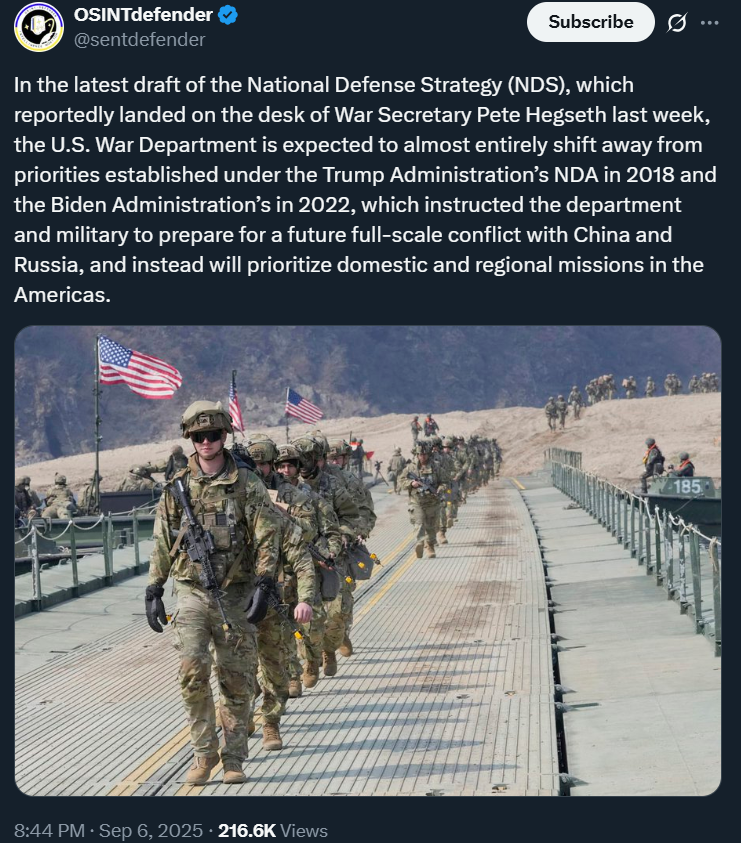
Conclusion
Through cooperative security locations in El Salvador, Aruba, and Curaçao; logistical hubs in Honduras; and deepening partnerships with Colombia and Guyana, the United States has developed a dispersed but potent regional architecture. This network is designed for agility—rotational forces, surveillance missions, and joint enforcement agreements—rather than traditional permanent basing. Yet its strategic value is clear: it surrounds Venezuela with layers of surveillance, operational access, and multinational cooperation, ensuring that Washington maintains both awareness and influence in the hemisphere.
-Lee
References
- U.S. Southern Command – Cooperative Security Locations: https://www.southcom.mil/Commanders-Priorities/Counter-Threats/Cooperative-Security-Locations/
- U.S. Fourth Fleet – CSL Comalapa: https://www.fourthfleet.navy.mil/CSL-Comalapa/
- SOUTHCOM Newsroom – CSL Aruba & Curaçao Background: https://www.southcom.mil/MEDIA/NEWS-ARTICLES/Article/1677026/csls-in-aruba-and-curacao/
- U.S. Southern Command – Joint Task Force-Bravo (Soto Cano): https://www.southcom.mil/Units/Joint-Task-Force-Bravo/
- DVIDS – New Combined Joint Operation Center at Soto Cano (Feb. 2025): https://www.dvidshub.net/news/465301/jtf-bravo-opens-new-combined-joint-operations-center
- SOUTHCOM Press Release – U.S. and Guyana Joint Flight Operations (Dec. 2023): https://www.southcom.mil/MEDIA/NEWS-ARTICLES/Article/3606060/us-guyana-conduct-joint-flight-operations/
- U.S. State Department – Guyana Shiprider Agreement (Treaty 20-918, in force Sept. 18, 2020): https://www.state.gov/20-918/
- SOUTHCOM – U.S. and Guyana Shiprider Agreement Info: https://www.southcom.mil/News/PressReleases/Article/2147449/uss-southcom-signs-shiprider-agreement-with-guyana/
- AP/El País – U.S. assistance to Guyana (Feb. 2024): https://apnews.com/article/guyana-us-military-venezuela-2024
- Bell Helicopter Contract with Guyana (Oct. 2024): https://www.flightglobal.com/defence/bell-signs-helicopter-deal-with-guyana/160326.article
- Guyana Chronicle – Guyana–Colombia Defense Pact (Aug. 27, 2025): https://guyanachronicle.com/2025/08/27/guyana-colombia-sign-defense-pact-to-boost-cooperation/
- SOUTHCOM – USS Normandy PASSEX with Guyana (Mar. 27, 2025): https://www.southcom.mil/MEDIA/NEWS-ARTICLES/Article/4158075/uss-normandy-guyana-navy-conduct-passex/